

A polarimeter is an analytical optical instrument designed to measure the angle of optical rotation caused by passing plane-polarized light through an optically active (chiral) substance in compliance with USP <781>, Ph. Eur. 2.2.7, and ICUMSA standards. Operating primarily at the sodium D-line (589.3 nm) or narrow-band 589 nm LED with Faraday modulation optical nulling, digital automatic polarimeters calculate specific rotation (α), enantiomeric excess, and International Sugar Scale (°Z) values with angular resolution up to ± 0.0001°. Coupled with Abbe refractometers measuring refractive index (nD 1.3000 to 1.7000 ± 0.0002) via critical angle total reflection, these instruments form the foundational backbone for pharmaceutical chiral release, sugar agro-processing, food QA, and fragrance testing.
Chirality is fundamental to modern pharmacology and biochemistry. Enantiomers of asymmetric chemical compounds often exhibit profoundly different pharmacological, toxicological, and biological activities. While chromatographic chiral separation (chiral HPLC) provides high-resolution analysis, polarimetry provides the most rapid, non-destructive, and legally mandated compendial assay for verifying enantiomeric purity, batch homogeneity, and active pharmaceutical ingredient (API) optical identity.
Concurrently, refractometry—measuring the deviation of light as it passes between optical media—serves as a primary rapid quantitative tool for determining liquid purity, chemical concentration, and dissolved solids (% Brix). For procurement directors, analytical laboratory managers, and university chemistry departments, this engineering guide evaluates the working principles, compendial tolerances, Peltier thermal regulation, and sourcing criteria for manual and digital polarimeters and Abbe refractometers.
1. Optical Activity Fundamentals: Biot's Law & Specific Rotation
When monochromatic light passes through a polarizing Nicol prism or dichroic sheet, its electric field vectors are constrained to oscillate in a single plane. When this plane-polarized light traverses a solution containing an asymmetric molecule (a chiral center lacking an internal plane of symmetry), the plane of polarization rotates clockwise (dextrorotatory, [+]) or counter-clockwise (levorotatory, [−]).
The observed angular rotation (α) is governed by Biot's Law, which establishes that optical rotation is directly proportional to the optical path length and solute concentration:
Where [α]λT is the specific rotation at temperature T and wavelength λ (expressed in °·mL / dm·g), α is the measured rotation in degrees (°), l is the path length of the polarimeter sample tube in decimeters (dm), and c is the solute concentration in g/mL. For pure liquids: [α] = α / (l · ρ), where ρ is liquid density.
2. Polarimeter Architectures: Visual Half-Shade vs. Digital Automatic Photoelectric Systems
Laboratories employ different polarimetric configurations depending on precision requirements and testing throughput:
Visual Laurent Half-Shade & Biquartz Polarimeters
- Half-Shade Principle: Uses a semi-circular quartz retardation plate dividing the circular field of view into two halves. The operator manually rotates the analyzer circle until both halves attain identical illumination intensity (the match point).
- Biquartz System: Utilizes two adjacent 3.75 mm quartz plates (one dextro, one levo) producing the sensitive tint of passage (transition from red to violet) at the optical zero point.
- Application: Ideal for university physics/chemistry education, teaching polarization optics, and non-critical laboratory screening with 0.05° vernier scale accuracy.
Digital Automatic Photoelectric Systems
- Faraday Modulator Optical Nulling: An alternating electromagnetic coil modulates the polarization angle. A high-sensitivity photodiode detects unbalance, and a closed-loop servo drive automatically rotates the analyzer prism to the precise optical null.
- Zero Subjectivity: Eliminates human eye fatigue and lighting subjectivity, measuring dark, turbid, or absorbing samples down to optical densities (OD) of 2.0 to 3.0.
- Ultra-High Precision: Achieves repeatability down to ± 0.001° to ± 0.0001° with automated multi-point averages and 21 CFR Part 11 audit trails.
3. Pharmacopeial Compliance: USP <781>, Ph. Eur. 2.2.7 & Thermal Control
Optical rotation is highly sensitive to sample temperature due to volume thermal expansion (altering volumetric concentration) and thermodynamic changes in solvent-solute conformational equilibria. Pharmacopeias strictly regulate testing parameters:
Compendial Requirements for Pharmaceutical Release:
- Wavelength Standardization: Testing must be performed at 589.3 nm (the sodium D doublet line) unless a monograph specifically dictates mercury lines (546.1 nm, 435.8 nm, 365.0 nm).
- Peltier Temperature Control: USP <781> specifies that the measurement temperature must be maintained at 20.0 °C ± 0.5 °C (European/US compendia) or 25.0 °C ± 0.5 °C. Advanced automatic polarimeters integrate built-in Peltier electronic heating and cooling directly into the sample chamber, avoiding external cumbersome water circulators.
- Polarimeter Tube Stress-Free Optics: Sample tubes (100 mm and 200 mm length) must have fused or optically flat end-windows assembled with calibrated torque to prevent mechanical mechanical stress birefringence that distorts polarized light.
- Solvent Blank Baseline: The polarimeter zero must be set with the exact solvent lot and cell used for the test substance to compensate for optical transmission cell window anomalies.
4. Industrial Sugar Polarimetry: The International Sugar Scale (°Z / °S)
In the global sugar manufacturing, refining, and trade industry, polarimeters configured as saccharimeters are the universal standard for payment and grading under the International Commission for Uniform Methods of Sugar Analysis (ICUMSA):
- Standard Normal Sugar Solution: Defined as 26.0160 g of pure dry sucrose dissolved in pure water at 20.0 °C and diluted to 100.00 mL.
- The 100 °Z Point: When illuminated at 589.25 nm in a 200 mm tube at 20.0 °C, this solution produces an angular rotation of exactly +34.626° ± 0.001°, which is calibrated as 100.00 °Z (Sugar Degrees).
-
Polarization (Pol) & Purity Calculation: By measuring polarization (°Z) alongside dissolved solids (% Brix via Abbe refractometer), sugar technologists instantly calculate apparent sucrose purity:
Apparent Purity (%) = (Pol °Z / % Brix) × 100
5. Refractometry Principles: Abbe Refractometers & Snell's Law
Refractometry determines the speed of light within a substance relative to vacuum. As light traverses from an optically denser medium (high-index optical prism, n1) to a rarer medium (liquid test sample, n2), it refracts according to Snell's Law:
Where θc is the critical angle of total internal reflection. Beyond this angle, all incident light reflects back into the prism, creating a sharp boundary line between illuminated and dark fields.
The Abbe Design: The Abbe refractometer (exemplified by the AJKANT Model AJK-ABRE-2610) employs a double prism block (illuminating prism and measuring flint glass prism) with an internal set of compensating Amici prisms. These Amici prisms eliminate chromatic dispersion caused by polychromatic white light, allowing precise measurement of the sodium D-line refractive index (nD20, 1.3000 to 1.7000) and sugar concentration (0 to 95% Brix) with digital precision.
6. Technical Specification & Instrument Comparison Matrix
| Instrument / Model | Optical Principle | Measuring Range | Accuracy / Resolution | Primary Industry Application |
|---|---|---|---|---|
| Touchscreen Auto Polarimeter (AJK-PHEQ-1376) | Automatic Photoelectric Optical Nulling | ± 89.99° Optical / ± 259 °Z | ± 0.001° / Res: 0.0001° | Pharma API Release, 21 CFR Part 11, R&D |
| Digital Auto Polarimeter (AJK-PHEQ-1337) | Photoelectric Servo Null Detection | ± 45° / ± 120 °Z Sugar Scale | ± 0.01° / Res: 0.001° | Industrial Sugar Mills, Food QC, Chemical QC |
| Digital Abbe Refractometer (AJK-ABRE-2610) | Critical Angle Total Reflection + Amici | nD 1.3000–1.7000 / 0–95% Brix | nD ± 0.0002 / Brix ± 0.1% | Petroleum, Essential Oils, Flavors, Beverages |
| Educational Auto Polarimeter (AJK-PHEQ-1336) | Digital Optical Sensor with LED Source | ± 45° Optical Rotation | ± 0.02° / Res: 0.005° | Pharmacy Colleges, Undergraduate Chemistry |
| Biquartz Polarimeter (AJK-PHIN-7527) | Dual Quartz Retardation Tint of Passage | 0 to 360° Full Circle Visual | 0.05° Vernier Division | Physics Wave Optics & Rotational Demonstration |
| Half Shade Polarimeter Setup (AJK-PHIN-7431) | Laurent Quartz Retardation Split Field | 0 to 360° Circular Scale | 0.05° Vernier Division | Optical Physics Labs, Sodium Vapor Source |
7. Featured AJKANT Polarimeters & Refractometers Catalog
Explore our export-certified optical instruments manufactured in Ambala, India and supplied to pharmaceutical quality laboratories, sugar mills, research institutes, and universities in over 60 countries:
Touch Screen Digital Automatic Polarimeter
Model: AJK-PHEQ-1376 | Catalog ID: 7247
- High-precision photoelectric nulling with 0.0001° resolution and ± 0.001° accuracy.
- 7-inch color touchscreen displaying optical rotation, specific rotation, concentration & °Z.
- Built-in Peltier temperature control chamber maintaining 20.0 °C / 25.0 °C ± 0.1 °C.
- Full compliance with USP <781>, Ph. Eur. 2.2.7, and 21 CFR Part 11 audit trails.
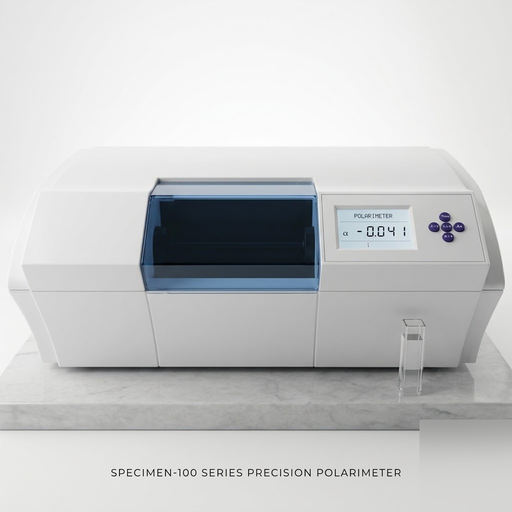
Digital Automatic Polarimeter (Benchtop Analytical)
Model: AJK-PHEQ-1337 | Catalog ID: 7280
- High-performance servo-motor optical null detection with fast 3-second measurement.
- Dual measurement modes: Optical Rotation (± 45°) and International Sugar Scale (± 120 °Z).
- Large backlit LCD with automatic multi-measurement averaging (up to 6 repeats).
- Accommodates both 100 mm and 200 mm sample tubes with stress-free quartz windows.
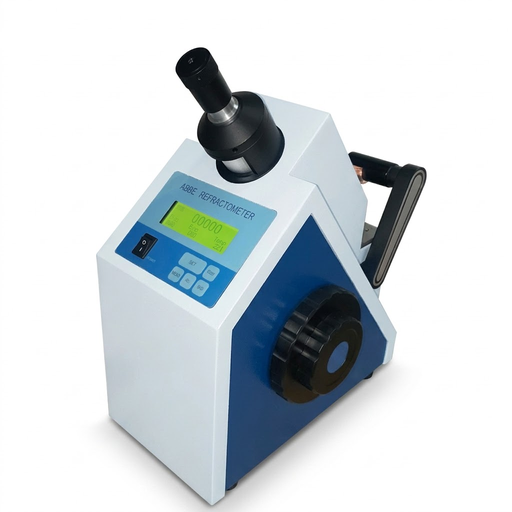
Digital Abbe Refractometer (Refractive Index & % Brix)
Model: AJK-ABRE-2610 | Catalog ID: 7179
- Wide refractive index range: nD 1.3000 to 1.7000 with ± 0.0002 accuracy.
- Brix sugar range: 0 to 95% Brix with 0.1% resolution and automatic temperature correction.
- Optical telescope with crosshair alignment and dual optical prisms with water bath ports.
- Digital LCD displaying refractive index, Brix, and measured prism temperature simultaneously.
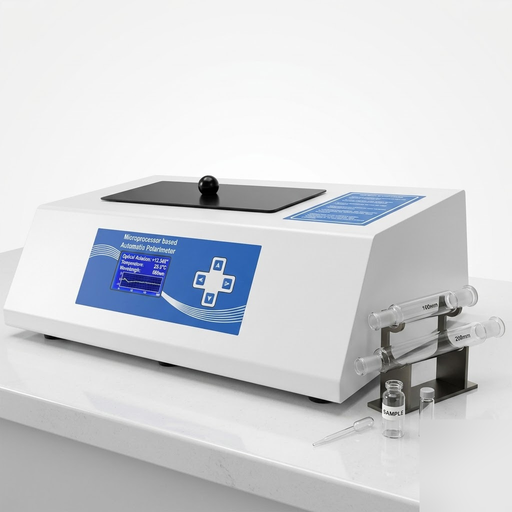
Digital Automatic Polarimeter (Educational Model)
Model: AJK-PHEQ-1336 | Catalog ID: 7281
- Engineered for university chemistry, pharmaceutical sciences, and teaching laboratories.
- Direct digital reading eliminating vernier scale interpolation errors.
- Long-life 589 nm monochromatic LED illumination source requiring zero warm-up time.
- Simple three-button operation (Zero Calibration, Measure, Display Mode).
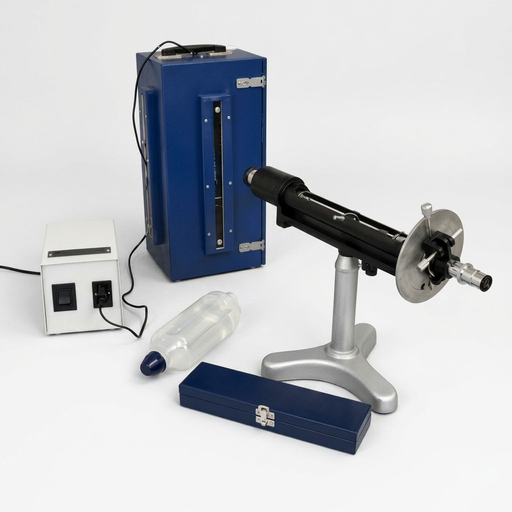
Precision Biquartz Polarimeter (Physics Laboratory)
Model: AJK-PHIN-7527 | Catalog ID: 5855
- Classic biquartz crystal plate delivering sensitive transition tint at zero position.
- 360° rotatable analyzer scale graduated to 1° with twin verniers reading to 0.05°.
- Heavy cast metal stand with adjustable inclination and light entrance tube.
- Supplied with 200 mm glass sample tube and optical test manual.
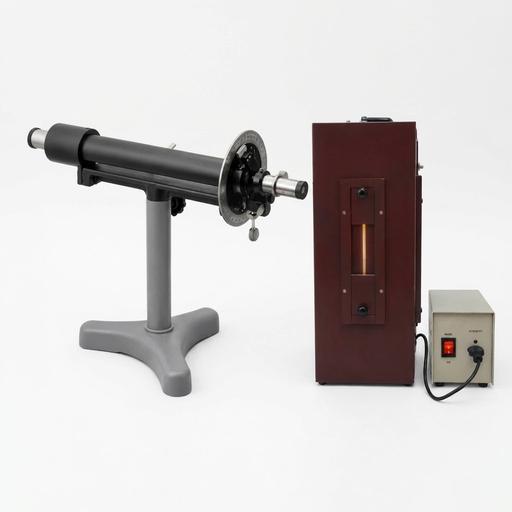
Laurent Half-Shade Polarimeter Complete Experimental Setup
Model: AJK-PHIN-7431 | Catalog ID: 5897
- High-quality Laurent half-wave quartz plate generating crisp split-circle boundary.
- Dual vernier reading scales graduated to 0.05° with integral reading magnifiers.
- Optical bench mounting bracket compatible with sodium vapor lamp sources.
- Ideal for verifying Biot's law, mutarotation of glucose, and sugar cane inversion kinetics.
8. Calibration & Optical Metrology Standards (Quartz Control Plates)
Unlike chemical calibration solutions which suffer from evaporation, degradation, and concentration drift, polarimeters are calibrated using permanent Quartz Control Plates (QCP):
- High-Purity Crystalline Quartz: Optically pure quartz disks cut perpendicular to the optic axis exhibit natural, permanent optical activity that does not change with time.
- Traceable Calibration Points: Typical standard sets include nominal values of +5.4° (~15 °Z), +17.3° (~50 °Z), and +34.6° (~100 °Z) calibrated against Physikalisch-Technische Bundesanstalt (PTB) or NIST primary standards.
- Refractometer Calibration: Abbe refractometers are calibrated at 20.0 °C using double-distilled deionized water (nD20 = 1.33299, 0.0% Brix) and high-index solid glass test pieces with monobromonaphthalene contact fluid (nD20 = 1.5163).
Frequently Asked Questions (FAQs)
Q1: What is the difference between optical rotation (α) and specific rotation ([α])?
Optical rotation (α) is the raw angle in degrees measured by the polarimeter, which varies depending on sample concentration, tube length, temperature, and wavelength. Specific rotation ([α]) is an intrinsic thermodynamic physical constant of a pure chiral compound calculated via Biot's Law ([α] = α / [l · c]), normalized to a standard path length of 1 decimeter (10 cm) and concentration of 1 g/mL at a defined temperature and wavelength.
Q2: Why is temperature control critical during polarimetric and refractometric testing?
Temperature affects both molecular spatial conformation and liquid density. For sucrose solutions, optical rotation shifts by approximately -0.00047 °Z per °C deviation from 20.0 °C. In refractometry, refractive index shifts significantly with thermal expansion (approximately -0.00045 nD per °C for water and aqueous solutions). Advanced digital instruments feature built-in Peltier temperature control chambers or automatic temperature compensation (ATC) algorithms to prevent thermal measurement errors.
Q3: How does a digital automatic polarimeter measure dark or highly absorbing samples?
Automatic polarimeters use high-intensity narrow-band LED light sources paired with ultra-sensitive photomultiplier or avalanche photodiode detectors and Faraday modulation. Even if an absorbing sample transmits less than 0.1% to 1.0% of incident light (optical density up to 3.0 OD), the electronic signal processing locks onto the modulated null signal without requiring sample chemical bleaching, which could alter optical activity.
Q4: What is the International Sugar Scale (°Z), and why is 100 °Z equal to +34.626°?
The International Sugar Scale (°Z), established by ICUMSA, normalizes sucrose purity measurements. A 'normal sugar solution' containing 26.016 g of pure sucrose dissolved in 100.0 mL of water at 20.0 °C produces an angular optical rotation of +34.626° in a 200 mm tube at 589.25 nm. This exact point is defined as 100.00 °Z, allowing sugar mill laboratories to read sucrose percentage directly on instrument screens.
Q5: Can AJKANT Overseas provide calibration certificates and IQ/OQ protocols for polarimeters?
Yes. AJKANT Overseas provides factory calibration certificates traceable to international NABL/NIST standards, standard quartz control plate verification data, and complete Installation Qualification (IQ) and Operational Qualification (OQ) documentation packages compliant with cGMP and FDA 21 CFR Part 11 requirements for all pharmaceutical and export clients.
Partner with AJKANT Overseas for Optical & Analytical Lab Instruments
AJKANT Overseas is an ISO 9001:2015 & CE-certified laboratory equipment manufacturer and exporter located in Ambala Cantt, India. We deliver complete turnkey analytical chemistry setups, pharmaceutical polarimeters, sugar agro-industry testing packages, and university optics laboratory setups with worldwide door-to-door export shipping.
Request B2B Wholesale Pricing & Export Quotation