

Laboratory Viscometers & Rheology Testing Equipment Sourcing Guide
Comprehensive technical engineering guide on digital rotational viscometers, Redwood No. 1 & No. 2 viscometers, Saybolt Universal & Furol apparatus, Engler viscometers, flow cups, and constant temperature kinematic viscosity baths for petroleum refineries, lubricants, paints, polymers, bitumen, and chemical research laboratories worldwide.
Quick Answer: What is a Laboratory Viscometer & What Are Its Core Industrial Types?
A Laboratory Viscometer is an analytical instrument engineered to measure a fluid's internal resistance to flow and shear deformation under specified thermal and shear rate conditions. Viscometers are fundamentally divided into two thermodynamic classes:
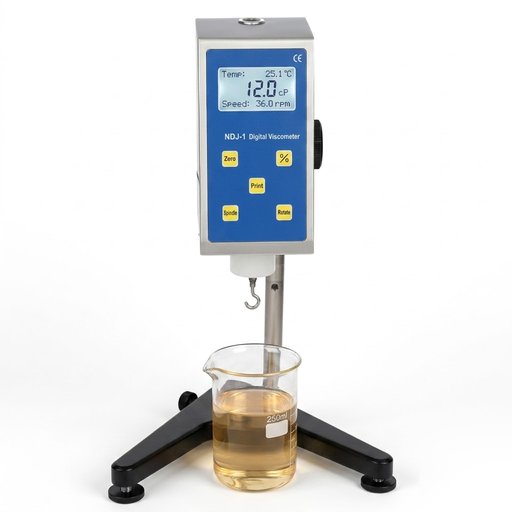
- Dynamic (Absolute) Viscometers: Measure shear stress relative to shear rate via motorized rotating spindles (Brookfield-principle rotational viscometers), reported in Centipoise (cP) or milliPascal-seconds (mPa·s).
- Kinematic Viscometers: Measure gravity-driven efflux time through precision calibrated orifices or capillary tubes, reported in Centistokes (cSt), mm²/s, Redwood Seconds, Saybolt Universal Seconds (SUS), or Engler Degrees (°E).
1. Fluid Mechanics Physics: Dynamic vs. Kinematic Viscosity & Unit Conversions
Viscosity is one of the most critical physical properties measured in chemical engineering, tribology, and process control. Understanding the mathematical relationship between dynamic and kinematic viscosity is essential for ASTM compliance and QA testing:
Newton's Law of Viscosity:
τ = μ · (dv / dy)
Where τ is shear stress (N/m²), μ is dynamic viscosity (Pa·s), and dv/dy is the velocity gradient or shear rate (s‾¹).
Kinematic Viscosity (ν) Relationship:
ν = μ / ρ
Where ν is kinematic viscosity (m²/s or Centistokes, cSt), and ρ is the fluid density at test temperature (kg/m³ or g/cm³). 1 cSt = 1 mm²/s = 1 cP / (density in g/cm³).
Newtonian Fluids
Fluids whose viscosity remains constant regardless of applied shear rate (e.g., pure water, mineral oils, gasoline, alcohol, standard silicone calibration oils). Accurately measured with any single-speed capillary or efflux viscometer.
Non-Newtonian Shear-Thinning (Pseudoplastic)
Viscosity decreases as shear rate increases (e.g., polymer solutions, paints, inks, shampoos, emulsions). Requires a multi-speed digital rotational viscometer to record flow curves across multiple RPM settings.
Thixotropic Fluids
Viscosity decreases over time under sustained mechanical stirring and gradually recovers when at rest (e.g., drilling muds, greases, coatings, gels). Demands timed digital rotational torque logging.
AJKANT Laboratory Viscometers & Testing Apparatus
Precision engineered and manufactured by AJKANT OVERSEAS in Ambala, India. Click on any model below for live specifications or direct institutional tender quotations.
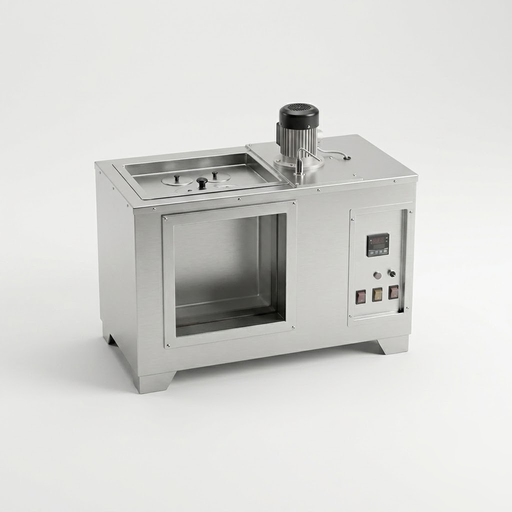
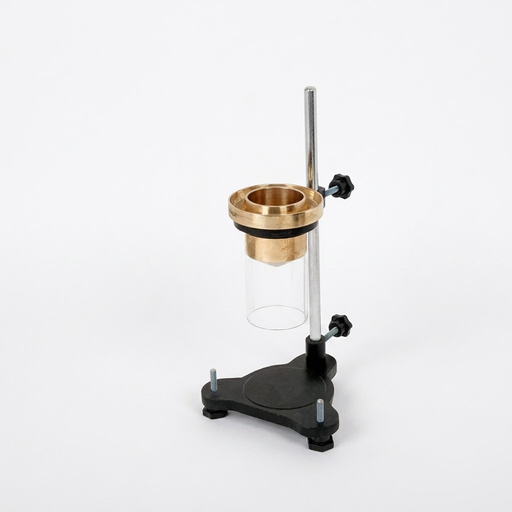
2. Comparative Engineering: Orifice Dimensions & ASTM Standards
Because empirical efflux viscometers measure gravity flow through a fixed geometric orifice, international test standards dictate exact physical dimensions, test volumes, and receiving flasks:
3. Technical Specifications Comparison Matrix: AJKANT Viscometer Line
Review the operational limits, thermal systems, and measuring ranges across our flagship testing instrumentation:
4. Good Testing Practice: Temperature Sensitivity & Standard Calibration
Viscosity is exponentially temperature-dependent; a deviation of just 1.0°C can introduce an error of 5% to 10% in measured viscosity. Standard laboratory operating protocols include:
1. Standardized Reference Temperatures
ASTM D445 and ISO 3104 standardize lubricating oil evaluations at 40.0°C (104°F) and 100.0°C (212°F) to determine the Viscosity Index (VI)—a dimensionless measure of viscosity change with temperature.
2. Certified Viscosity Standards (NIST Traceable)
Regularly calibrate viscometer capillaries and rotational spindles with Newtonian mineral oil standards certified to ASTM D2162. Never rely on water alone for high-viscosity calibrations.
3. Preventing Orifice Wear & Damage
Never clean Redwood agate jets or Saybolt orifices with metallic wires or drill bits. Even a microscopic scratch alters the flow coefficient permanently. Use lint-free optical tissue and filtered solvent (petroleum ether/toluene).
4. Meniscus Timing & Parallax Correction
In glass capillary viscometry, utilize high-resolution digital stopwatches (0.01s accuracy). Ensure the operator's line of sight is perfectly horizontal with the etched timing ring to eliminate meniscus parallax error.
5. Direct Factory Sourcing Advantages from AJKANT OVERSEAS, India
By procuring testing instrumentation directly from AJKANT OVERSEAS in Ambala, institutions guarantee manufacturing compliance, certified materials, and significant wholesale cost savings:
Precision Gem-Quality Agate Orifices
Our Redwood viscometers feature genuine jewel-cut natural agate jets micro-honed to ±0.005 mm tolerance, ensuring 100% adherence to British IP 70 requirements.
NABL Calibration Traceability
Every kinematic bath and rotational viscometer is verified against NABL/NIST certified reference fluids across multiple temperature points and shipped with test certificates.
Export-Grade ISPM-15 Wooden Crates
Sensitive glassware, agate jets, and digital electronic viscometers are encased in custom molded high-density foam within heat-treated export cases for zero damage in air/sea freight.
Turnkey Institutional Procurement
We regularly supply complete petroleum testing lab setups, university civil/chemical labs, and national oil corporations across the GCC, Africa, and Southeast Asia.
6. Frequently Asked Questions (FAQ) — Laboratory Viscometer Sourcing & Use
Q1: What is the difference between Redwood Viscometer No. 1 and No. 2?
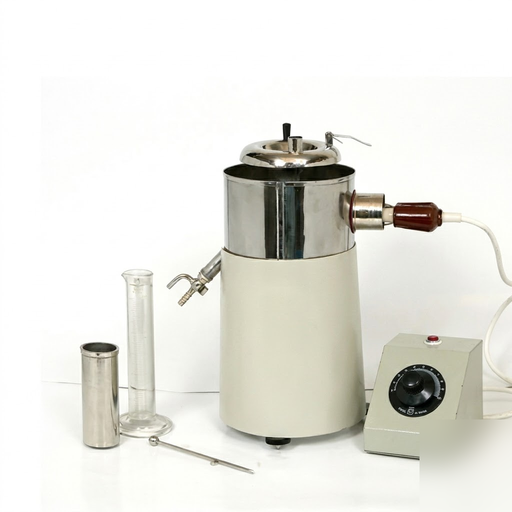
Redwood No. 1 has an agate orifice diameter of 1.62 mm and is designed for oils whose flow time does not exceed 2000 seconds. Redwood No. 2 has a larger orifice of 3.80 mm, designed for heavy residual fuel oils and bitumen; its flow time is approximately one-tenth (1/10th) of the flow time through a Redwood No. 1 viscometer.
Q2: What is the difference between Saybolt Universal (SUV) and Saybolt Furol (SFV)?
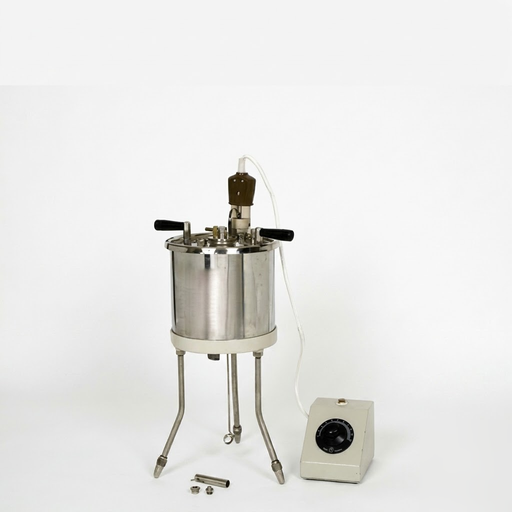
In accordance with ASTM D88, Saybolt Universal uses a 1.765 mm orifice to measure petroleum oils with efflux times between 32 and 1000 seconds. Saybolt Furol (Fuel and Road Oil) uses a larger 3.15 mm orifice to measure viscous products, asphalt road binders, and heavy fuel oils; Furol efflux time is roughly one-tenth the Universal flow time.
Q3: How do you convert Redwood Seconds or Saybolt Universal Seconds to Centistokes (cSt)?
Empirical conversion formulas correlate efflux time (t in seconds) to kinematic viscosity (ν in cSt):
• Redwood No. 1: ν = 0.264·t - (190 / t) for t between 40s and 85s; ν = 0.247·t - (50 / t) for t > 100s.
• Saybolt Universal: ν = 0.226·t - (195 / t) for 32s ≤ t ≤ 100s; ν = 0.220·t - (135 / t) for t > 100s.
Q4: Why is an agate jet used in Redwood viscometers instead of brass or stainless steel?
Agate is an ultra-hard, chemically inert, non-porous natural mineral (hardness 6.5–7 on Mohs scale). It resists wear from corrosive sulfur compounds in heavy fuels, exhibits virtually zero thermal expansion, and maintains its micro-machined bore diameter across thousands of hot testing cycles without dimensional drift.
Q5: What are the advantages of a Digital Rotational Viscometer over an efflux viscometer?
A digital rotational viscometer provides direct dynamic viscosity readings (in cP/mPa·s) without requiring density calculations or manual stopwatch timing. It tests non-Newtonian, thixotropic, and pseudoplastic liquids across variable shear rates (RPM), can log data directly to PC or printer, and measures a vastly wider viscosity span (10 to 2,000,000 cP).
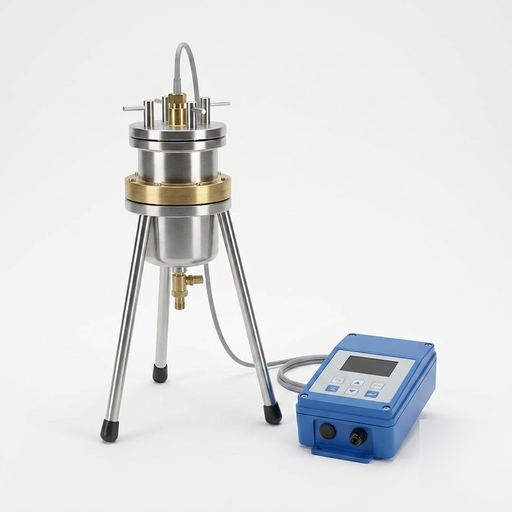
Q6: Why is a Kinematic Viscosity Bath required to maintain ±0.01°C stability?
ASTM D445 requires precision kinematic viscosity measurements with repeatability within 0.35%. Because lubricating oils change viscosity by roughly 1% to 2% for every 0.1°C shift, the constant temperature bath must maintain ±0.01°C to ±0.02°C stability throughout the test zone.
Q7: What flow cup viscometers are used for paint and coating viscosity?
Paints and industrial finishes are tested using Ford Cups (ASTM D1200 with #2, #3, #4 nozzles) or Zahn Cups (dip-type cups #1 to #5). The cup is immersed in paint, lifted, and the time in seconds until the first break in the steady efflux stream is recorded as the flow time.
Equip Your Testing Laboratory with Direct Factory Sourcing
Whether you require digital rotational viscometers for pharmaceutical formulation, Redwood/Saybolt viscometers for petroleum QC, or ASTM D445 kinematic baths for lubricants, partner directly with AJKANT OVERSEAS for certified precision, factory warranties, and competitive B2B wholesale pricing.