

Laboratory Moisture Analyzers & Karl Fischer Titrators Sourcing Guide
Comprehensive technical engineering guide on digital halogen moisture balances, infrared loss-on-drying (LOD) analyzers, automated Karl Fischer moisture titrators, and Dean-Stark distillation systems for pharmaceutical active ingredients (APIs), food grain quality, plastic resins, chemicals, and industrial commodities worldwide.
Quick Answer: What is a Laboratory Moisture Analyzer & How Does It Compare to Karl Fischer Titration?
A Laboratory Moisture Analyzer (halogen moisture balance) is an integrated thermogravimetric measuring system combining a high-precision electromagnetic balance with a circular halogen or infrared heating module. It determines moisture content by continuously weighing a sample while heating it until dry, calculating moisture percentage via the Loss on Drying (LOD) formula: Moisture % = [(Initial Weight - Final Dry Weight) / Initial Weight] × 100.
- Halogen Moisture Balances (Thermogravimetry / LOD - USP <731>): Measures total volatile mass loss (free water, surface moisture, and volatile organics) in 5 to 15 minutes across a range of 0.01% to 100% moisture. Ideal for food grains, powders, plastics, and routine industrial QC.
- Karl Fischer Titration (Chemical Specificity - USP <921> / ASTM E203): Measures water content exclusively via quantitative Bunsen-reaction titration (I2 + SO2 + H2O). Detects true molecular and bound water from ultra-trace 1 ppm (0.0001%) up to 100% without interference from volatile solvents, making it mandatory for pharmaceutical active substances (APIs) and transformer oils.
1. Analytical Methodologies: Halogen LOD vs. Karl Fischer Titration vs. Dean-Stark Distillation
Moisture impacts shelf stability, chemical reactivity, microbial growth, and processing flowability. Laboratory managers must select the appropriate method depending on sample chemistry, expected moisture range, and regulatory pharmacopeial requirements:
AJKANT Laboratory Moisture Analyzers & Titration Systems
Manufactured and quality-tested by AJKANT OVERSEAS in Ambala, India. Click on any model below for live specifications or direct institutional tender quotations.
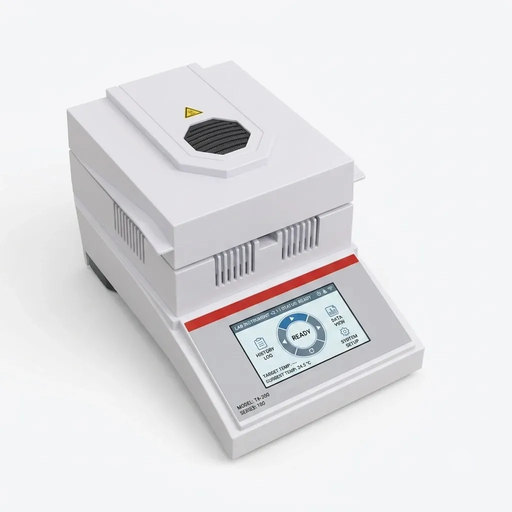
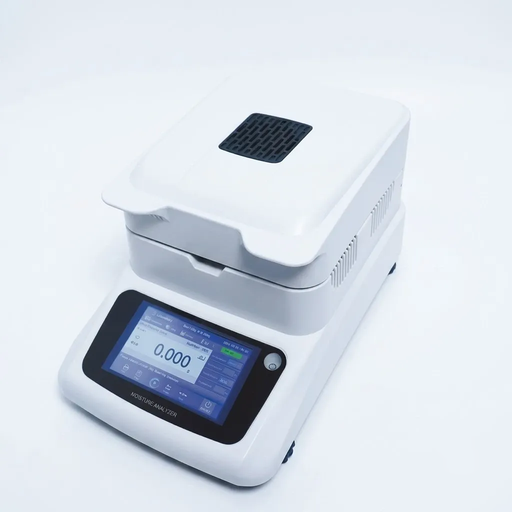
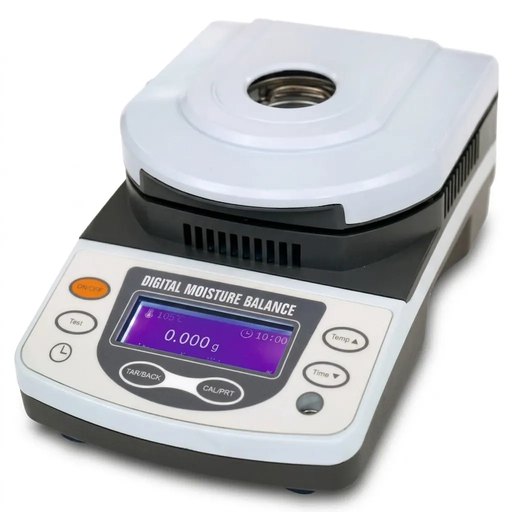
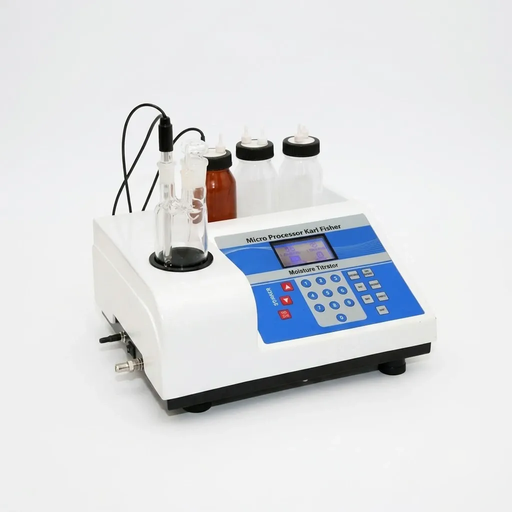
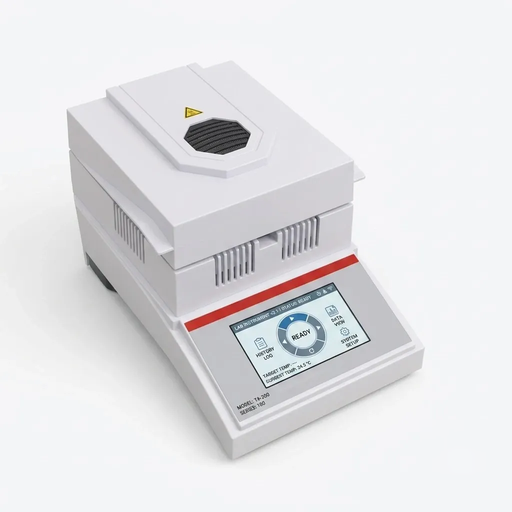
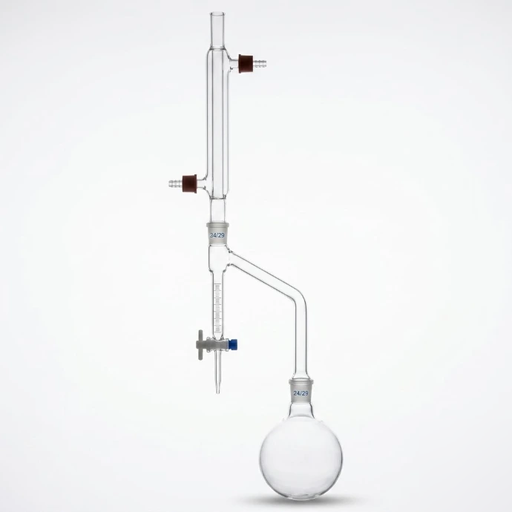
2. Thermal Radiation Kinetics: Halogen vs. Infrared vs. Traditional Drying Ovens
A conventional laboratory gravity or forced-convection oven requires 2 to 4 hours to determine moisture according to standard drying protocols. Halogen and Infrared moisture balances reduce this testing cycle to under 10 minutes through direct radiant energy transfer:
1. Circular Halogen Radiant Lamp
Halogen radiators emit short-wave infrared radiation (peak at 1.0–1.4 μm). They achieve the target temperature (e.g. 105°C or 160°C) within 30 seconds, heating the sample uniformly from both surface and depth for rapid moisture evaporation.
2. Dark Infrared Ceramic Radiator
Ceramic radiators emit medium-to-long wave infrared radiation (peak at 3.0–5.0 μm) without emitting visible light. Ideal for high-sugar food commodities, starches, and organic chemicals that scorch or decompose under intense visible light.
3. Karl Fischer Stoichiometric Titration
Operates at ambient temperature (or via an optional KF drying oven). Because it relies on a specific chemical stoichiometry rather than heat, thermal decomposition, caramelization, and solvent evaporation do not distort water measurement.
4. Real-Time Drying Profile Control
AJKANT halogen analyzers feature programmable heating modes: Standard (steady climb), Rapid (boost initial heat by 140% to speed up testing), Gentle (ramps slowly over 3 min to avoid skin-formation), and Stepped (multi-temperature staging).
3. Technical Specifications Comparison Matrix: AJKANT Moisture Instrumentation
Review the analytical limits, balance capacities, readability, and communication interfaces across our flagship models:
4. Good Laboratory Practice (GLP): Pharmacopeial Compliance & Sample Preparation
To ensure audit-ready compliance under United States Pharmacopeia (USP), European Pharmacopoeia (Ph. Eur.), and ISO standards, laboratories must establish standard operating protocols:
1. Sample Layer Thickness & Surface Area
Always spread the sample evenly in a thin, uniform layer across the entire aluminum pan. Piling material in a cone creates internal thermal insulation, causing the outer crust to overheat while trapped moisture in the core fails to escape.
2. Fiber Filter Pads for Liquid Samples
When analyzing liquid emulsions, milk, adhesives, or wastewater sludge, place a porous glass fiber filter pad in the pan. This draws fluid via capillary action, preventing droplet skin formation and violent boiling spatter.
3. Karl Fischer Reagent Standardization
Calibrate the Karl Fischer water titer daily using certified Sodium Tartrate Dihydrate (15.66% ±0.05% H2O) or NIST-traceable 10.0 mg/g water standards to account for ambient atmospheric humidity absorption.
4. Temperature Sensor Calibration Check
Perform routine two-point thermal calibration (e.g. 100°C and 160°C) using an independent calibrated temperature adjustment kit to guarantee heating chamber accuracy according to ISO 9001 guidelines.
5. Direct Factory Sourcing Advantages from AJKANT OVERSEAS, India
By procuring analytical moisture instrumentation directly from AJKANT OVERSEAS in Ambala, institutions guarantee certified sensor engineering, reliable spare parts, and wholesale export pricing:
Electromagnetic Force Restoration
Our moisture balances incorporate high-grade electromagnetic force compensation load cells, providing 0.001g readability with superior temperature drift compensation.
NABL Traceable 5-Point Calibration
Every balance is calibrated with Class F1 / E2 stainless steel reference weights, and supplied with individual calibration certificates traceable to national standards.
ISPM-15 Export Packaging
Sensitive balances and glassware titrators are cushioned in custom CNC-molded polyethylene foam inside heat-treated export cases for zero damage in air or sea freight.
Turnkey Institutional Tenders
We regularly supply ministries of agriculture, food safety authorities, pharmaceutical manufacturers, and research universities across the Middle East, Africa, and Southeast Asia.
6. Frequently Asked Questions (FAQ) — Laboratory Moisture Analysis
Q1: What is the main difference between Halogen and Infrared moisture balances?
A halogen moisture balance utilizes a tungsten-halogen gas-filled lamp that reaches full thermal output in under 30 seconds, emitting short-wave infrared radiation that rapidly penetrates and dries most powders, chemicals, and grains. An infrared moisture balance uses a dark ceramic radiant heater emitting medium/long-wave IR without visible light, preventing burning or caramelization in delicate organic food products, spices, and high-sugar samples.
Q2: When must Karl Fischer Titration be used instead of a Moisture Balance?
Karl Fischer titration is mandatory when the moisture content is in the trace range below 0.05% (down to 1 ppm), when the sample contains volatile organic solvents (like ethanol or toluene) that would evaporate in a moisture balance and create a false high reading, or when pharmacopeial monographs (USP <921>) specifically require water-specific stoichiometry for active pharmaceutical ingredients (APIs).
Q3: What sample weight should be used in a halogen moisture analyzer?
The optimal sample weight is typically between 3 to 5 grams for powders and fine granules (or 2 to 3 grams for viscous liquids with filter pads). Using less than 1 gram reduces statistical precision, while overloading with more than 10 grams creates an excessively thick layer that delays drying and risks thermal scorching.
Q4: How does a moisture analyzer determine when drying is finished?
AJKANT moisture analyzers feature three switch-off criteria: Automatic Endpoint (stops when sample mass loss is less than 1 mg per 30, 60, or 90 seconds), Timed Endpoint (runs for a preset duration, e.g. 10 minutes), or Manual Stop. The automatic endpoint is the standard for GLP/GMP reproducibility.
Q5: What is the Dean and Stark method used for?
The Dean and Stark method (ASTM D95 / IP 74) is an azeotropic distillation technique used to determine water content in petroleum products, lubricating oils, and tars. The sample is heated with an immiscible carrier solvent (xylene/toluene); the co-distilled vapor condenses in a reflux trap where water separates and settles at the bottom for direct volumetric measurement.
Q6: How often should an analytical moisture balance be calibrated?
The internal balance should be calibrated with standard certified calibration weights weekly (or whenever the instrument is relocated). The heating chamber temperature should be verified using an independent temperature calibration disk every 6 to 12 months for ISO 17025 compliance.
Q7: What data communication options are available on AJKANT moisture analyzers?
AJKANT moisture analyzers feature RS232 and USB serial ports compliant with GLP/GMP reporting, allowing direct output of sample ID, operator name, initial weight, final dry weight, drying time, temperature curve, and final moisture percentage to analytical thermal printers or laboratory LIMS software.
Equip Your Analytical Laboratory with Certified Moisture Systems
Whether setting up pharmaceutical QC suites, grain inspection laboratories, or polymer testing benches, partner directly with AJKANT OVERSEAS for certified precision, factory warranties, and competitive B2B wholesale export pricing.