
Laboratory Water Baths & Circulators Sourcing Guide
Comprehensive technical engineering guide on serological water baths, constant temperature precision circulators, refrigerated chiller baths, shaking incubator baths, and high-temperature oil baths for clinical diagnostics, microbiology, pharmaceutical assays, and industrial QC testing worldwide.
Quick Answer: What is a Laboratory Water Bath & What Are Its Core Industrial Benchmarks?
A Laboratory Water Bath is a constant-temperature fluidic incubation system designed to maintain liquid reagents, microbiological cultures, biological samples, and chemical reactions at a strictly controlled temperature—typically ranging from ambient +5°C up to 99.9°C (and down to -20°C in refrigerated circulating models, or up to 300°C in high-temperature silicone oil baths). Heat transfer occurs via direct immersion in heated liquid, providing significantly faster and more uniform heat transfer than air convection ovens.
1. Engineering Anatomy & Fluidic Heat Transfer Physics
Water has a specific heat capacity of 4,184 J/(kg·K)—over four times greater than air—making liquid immersion baths the gold standard for rapid, non-destructive sample warming. Modern laboratory water baths engineered by AJKANT OVERSEAS incorporate specific design features to guarantee thermodynamic uniformity:
1. Seamless Deep-Drawn SS304 Chamber
Fabricated from single-piece deep-drawn AISI-304 stainless steel with curved corner radii. Eliminates internal corner welds where mineral scale deposits, aggressive chlorides, and microbial biofilms typically induce pitting corrosion.
2. Low-Density Tubular Heating Array
Incoloy-sheathed tubular immersion elements mounted beneath a perforated diffuser floor plate. Distributes gentle thermal flux across the entire base area, preventing localized boiling and hot-spot degradation.
3. Gabled Pitched Condensate Lid
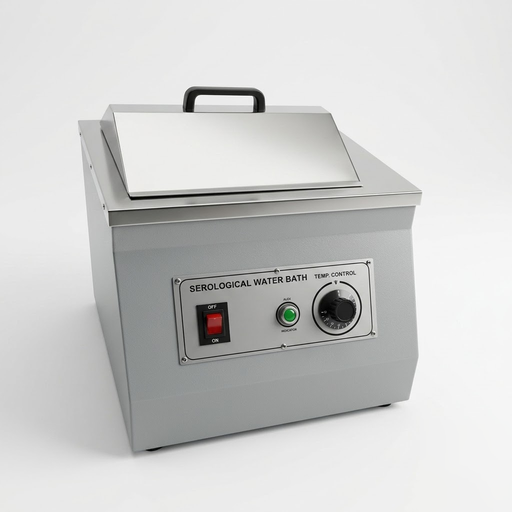
Pitched A-frame stainless steel lid ensures all evaporated water droplets roll smoothly down internal sloping sidewalls back into the reservoir, completely preventing droplet fallout onto open culture tubes.
4. PID Temperature Controller & Pt-100
Microprocessor-controlled proportional-integral-derivative algorithm reads platinum RTD (Pt-100) sensors with 0.1°C resolution, suppressing overshoot and maintaining steady-state equilibrium at 37.0°C and 56.0°C.
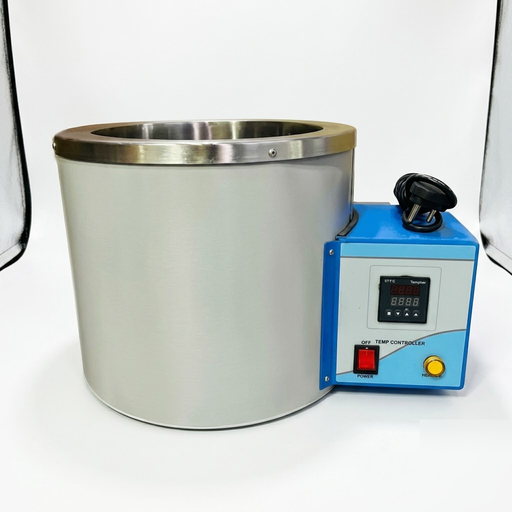
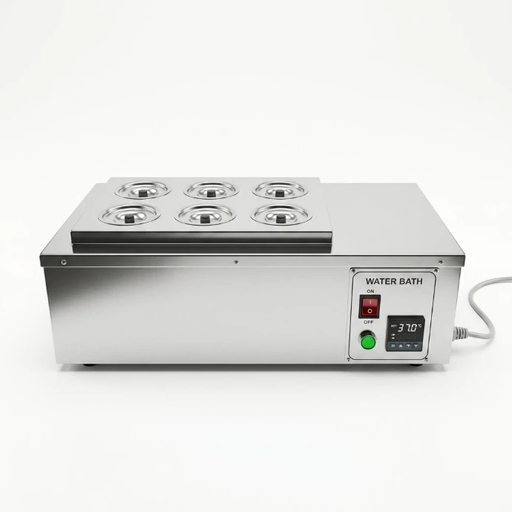
AJKANT Laboratory Water Baths & Fluidic Thermal Systems
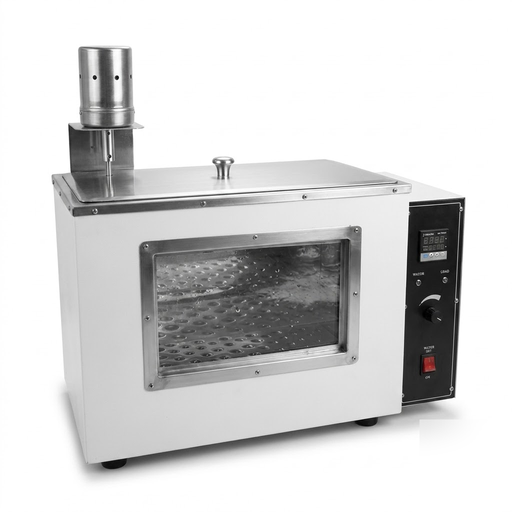
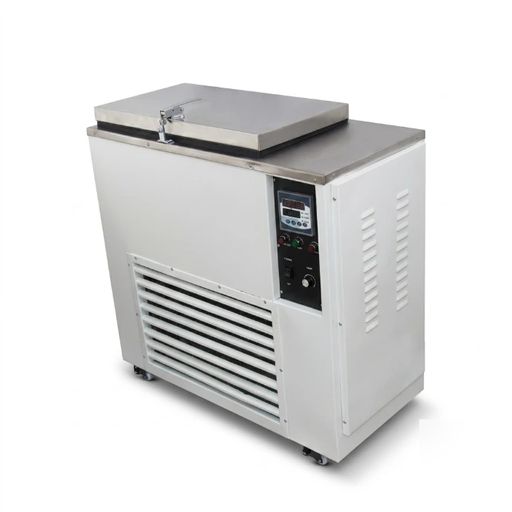
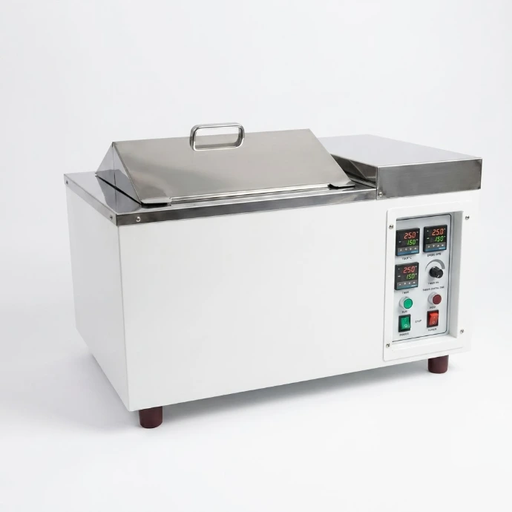
Precision engineered and manufactured by AJKANT OVERSEAS in Ambala, India. Click on any model below for live specifications or direct institutional tender quotations.
2. Classification of Laboratory Baths: Selecting the Right Type
Depending on fluid mechanics, temperature domain, and motion dynamics, laboratory fluidic baths fall into five discrete engineering categories:
3. Technical Specifications Comparison Matrix: AJKANT Water Bath Series
Review and compare the mechanical, electrical, and thermal parameters across our standardized water and oil bath models:
4. Good Laboratory Practice (GLP): Water Quality & Bath Maintenance Protocol
Over 80% of premature heater element failures and tank pitting cases stem from inappropriate working fluid selection. Laboratory managers should adhere to these operational guidelines:
1. The Danger of Tap Water (Scaling & Pitting)
Tap water contains dissolved calcium carbonate (CaCO3) and magnesium salts that precipitate onto heater sheaths, creating an insulating thermal crust that causes elements to burn out. Chlorides in municipal tap water also penetrate stainless steel passivation layers, inducing permanent pinhole leaks.
2. Recommended Fluid: Distilled / Deionized Water
Always fill the reservoir with pure distilled water or deionized water with electrical conductivity between 1 to 10 µS/cm. Avoid ultra-pure 18.2 MΩ·cm water from polishing systems, as water completely stripped of ions can leech metal from stainless steel grades.
3. Algae & Microbial Biofilm Control
Warm water maintained at 37°C creates the optimal habitat for algae and bacterial growth. Add a non-foaming laboratory algaecide (such as 0.1% benzalkonium chloride) monthly. Empty, wash with mild laboratory detergent, rinse, and refill weekly for clinical compliance.
4. Float Level Switch & Dry-Run Protection
Never operate a water bath without covering heater elements by at least 25 mm of liquid. All AJKANT water baths integrate a magnetic float safety interlock that instantaneously disengages heater relay coils if water levels drop below the threshold.
5. Direct Factory Procurement Advantages from AJKANT OVERSEAS, India
Procuring laboratory fluidic heating equipment directly from AJKANT OVERSEAS in Ambala ensures verified quality, OEM branding options, and significant institutional cost savings:
100% Seamless SS304 Tanks
We press our water bath chambers on hydraulic deep-drawing presses using prime grade AISI-304 stainless steel sheets, eliminating fabricated weld seams that crack under thermal cycles.
NABL Traceable 5-Point Calibration
Every unit undergoes a multi-point thermal validation test (at 37°C, 56°C, and 90°C) with NIST/NABL traceable reference thermistors, accompanied by a serialized factory calibration test certificate.
ISPM-15 Certified Seaworthy Crates
Export shipments are cushioned in custom CNC-molded polyethylene foam inside heat-treated export wooden cases with vapor-proof desiccant sealing for 100% moisture protection in sea transit.
Turnkey Institutional Supply
We fulfill turn-key government hospital tenders, university lab packages, and distributor wholesale supply across the Middle East (Dubai, Saudi Arabia), Africa (Nigeria, Kenya), and Southeast Asia.
6. Frequently Asked Questions (FAQ) — Laboratory Water Baths
Q1: What is the primary difference between a circulating water bath and an unstirred water bath?
An unstirred (serological) water bath relies solely on natural thermal convection, resulting in a temperature gradient of approximately ±0.5°C across the reservoir. A circulating water bath utilizes a motorized magnetic pump or impeller to continuously churn the fluid, eliminating thermal stratification and achieving ultra-precise uniformity of ±0.05°C to ±0.1°C, essential for sensitive enzymatic and genetic assays.
Q2: Why is the standard serological water bath incubation temperature set at 37°C or 56°C?
37.0°C represents normal human body temperature, providing the optimum kinetic environment for human cell viability, bacterial culture growth, and enzymatic activity. 56.0°C is the exact threshold required for clinical serum inactivation—heating blood serum for 30 minutes at 56°C inactivates heat-labile complement proteins without destroying diagnostic antibodies.
Q3: Can a standard water bath be operated at 100°C?
Water boils at 100°C at sea level, resulting in vigorous bubble formation, steam loss, splashing, and rapid liquid depletion. Therefore, standard water baths are engineered to operate continuously up to 95°C to 99.9°C (sub-boiling). For operations strictly requiring temperatures above 100°C up to 300°C, a high-temperature laboratory oil bath utilizing thermal silicone fluid must be used.
Q4: Why should a gabled roof lid always be used on a laboratory water bath?
A flat cover causes condensing steam droplets to pool and fall vertically directly onto test tube caps, presenting a severe risk of cross-contamination or dilution of open samples. A gabled (pitched) roof lid directs all condensate droplets to slide harmlessly down the angled slope into the perimeter of the tank.
Q5: What test tube racks fit inside AJKANT serological water baths?
AJKANT water baths feature standardized internal chamber footprints that hold from 2 up to 8 standard stainless steel or polypropylene test tube racks (accommodating 12mm, 16mm, 18mm, 20mm, and 25mm diameter test tubes, Falcon 15ml/50ml conical tubes, and microcentrifuge tube floats).
Q6: How does a refrigerated circulating bath achieve cooling down to -20°C?
Refrigerated circulating baths incorporate a heavy-duty hermetically sealed cooling compressor with an internal evaporator cooling coil wrapped around or submerged within the tank. Utilizing a mixture of 50% distilled water and 50% industrial ethylene/propylene glycol prevents freezing, allowing stable liquid circulation from -20°C up to +100°C.
Q7: What safety features are integrated into AJKANT water baths?
Safety engineering includes a low-water-level float interlock to prevent dry heating, an independent secondary hydraulic over-temperature safety thermostat (DIN 12877 Class 1), high-grade double-walled mineral insulation, and a dedicated rear drain valve for safe, scald-free fluid disposal.
Equip Your Laboratory with Factory-Direct Fluidic Heating Systems
Whether setting up clinical pathology testing suites, biotechnology culture rooms, or pharmaceutical QC testing benches, partner directly with AJKANT OVERSEAS for certified thermal precision, factory warranties, and competitive B2B export pricing.