
Laboratory Muffle Furnace & High-Temperature Box Furnace Sourcing Guide
Comprehensive technical engineering guide on 900°C, 1200°C, 1400°C, and 1600°C laboratory muffle furnaces, Kanthal A-1 / SiC / MoSi2 heating elements, digital PID ramp-and-soak controllers, refractory ceramic fiber insulation, and ASTM/USP ash testing compliance for metallurgical, pharmaceutical, chemical, and materials research laboratories worldwide.
Quick Answer: What is a Laboratory Muffle Furnace & How Does It Work?
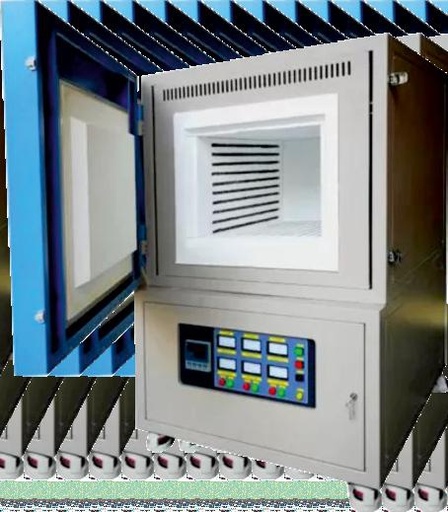
A Laboratory Muffle Furnace (also known as a high-temperature box furnace or retort furnace) is an enclosed front-loading thermal processing instrument engineered to heat materials to extreme temperatures—typically from 900°C up to 1600°C—while completely isolating the specimen inside an inner refractory chamber (the "muffle"). This physical barrier prevents direct exposure to open heating elements, combustion by-products, and electrical sparks, ensuring uniform radiant heating, zero specimen contamination, and precise atmospheric purity.
1. Engineering Principles: Muffle Furnace vs. Standard Laboratory Convection Oven
A frequent query encountered by institutional procurement teams is the operational boundary between a laboratory drying oven and a high-temperature muffle furnace. Understanding this distinction is vital for laboratory safety, equipment longevity, and analytical accuracy:
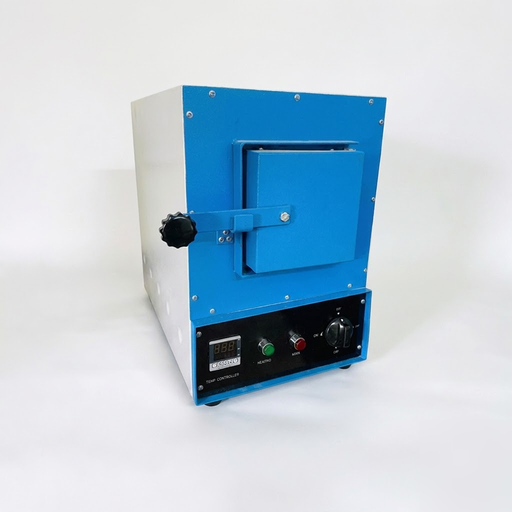
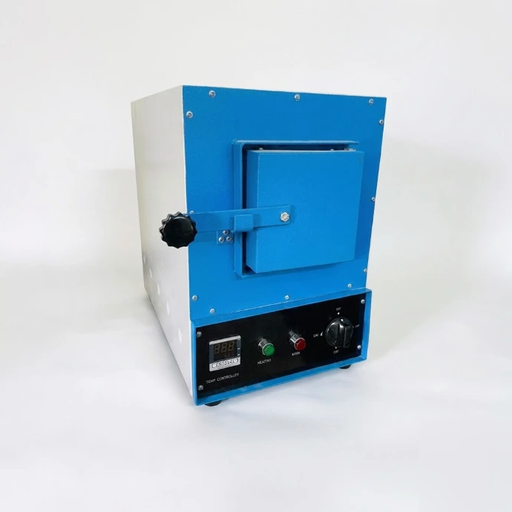
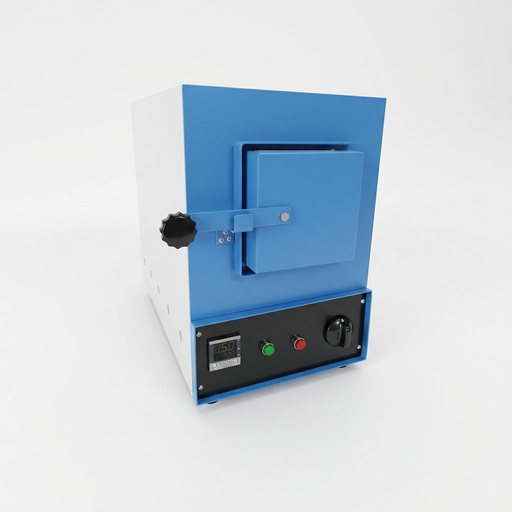
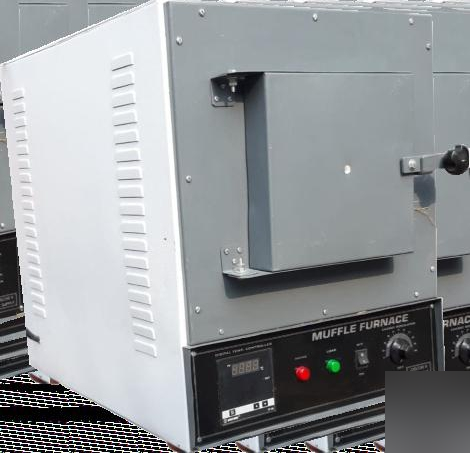
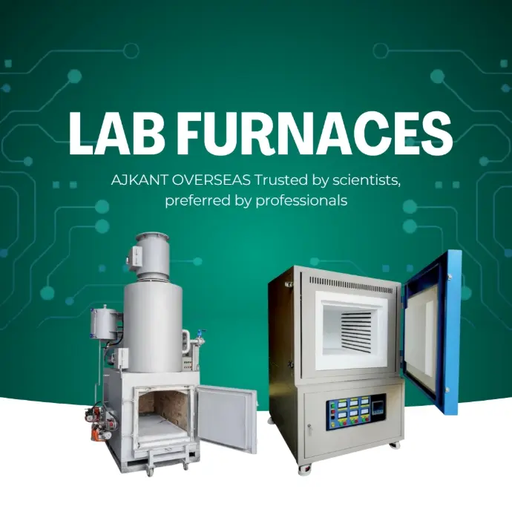
AJKANT High-Temperature Laboratory & Industrial Furnaces
Engineered and manufactured by AJKANT OVERSEAS in Ambala, India. Click any model below for live technical datasheets or direct institutional RFQ quotations.
2. Heating Element Metallurgy & Operating Temperature Tiers
The maximum operating temperature and atmospheric capability of any muffle furnace are fundamentally dictated by the physical metallurgy of its heating elements. AJKANT OVERSEAS engineers three primary element classes:
Tier 1: Kanthal A-1 Iron-Chromium-Aluminium (FeCrAl)
Operating Range: Ambient up to 1200°C (Continuous at 1100°C).
Forms a self-regenerating alumina (Al2O3) protective oxide layer upon heating. Ideal for general laboratory ashing, gravimetric loss on ignition (LOI), and educational college laboratories. Highly resistant to thermal fatigue and economical to replace.
Tier 2: Silicon Carbide (SiC) Heating Rods
Operating Range: 1100°C to 1450°C continuous.
Non-metallic ceramic resistor rods with high mechanical strength at high temperatures. Utilized for advanced technical ceramics sintering, high-temperature alloy research, and catalyst activation where standard metallic wire coils would sag or melt.
Tier 3: Molybdenum Disilicide (MoSi2) Hairpin Elements
Operating Range: 1400°C up to 1700°C / 1800°C.
Cermet material that produces a self-healing quartz glass (SiO2) skin. Operates in oxidizing, inert, and reducing atmospheres without element degradation. Found in advanced nanotechnology, zirconia dental disc sintering, and superalloy research.
3. Standard Laboratory Testing Protocols Supported by AJKANT Muffle Furnaces
AJKANT muffle furnaces are engineered to comply with recognized international standard test methods across analytical industries:
ASTM D3174 / ISO 1171 — Ash Content in Coal
Controlled heating from room temp to 500°C in 1 hour, followed by ramping to 750°C (±15°C) with continuous chimney chimney draft air exchange to oxidize combustible matter completely.
USP <281> / EP 2.4.14 — Sulfated Ash (Residue on Ignition)
Determines inorganic impurities in organic pharmaceutical raw materials by wetting with sulfuric acid and incinerating in silica/platinum crucibles at 600°C (±50°C) until white ash remains.
ASTM C114 — Chemical Analysis of Hydraulic Cement
Loss on Ignition (LOI) testing of portland cement and clinker at 950°C to 1000°C to quantify carbonate decomposition and moisture content before batch dispatch.
ASTM D5630 — Ash Content in Thermoplastics
Quantifies inorganic filler content (glass fiber, calcium carbonate, talc, titanium dioxide) in compounded polymer pellets by pyrolysis at 600°C–800°C.
4. Technical Specifications Comparison Matrix: AJKANT Furnace Line
Review the electrical, dimensional, and thermal parameters across our laboratory and industrial high-temperature furnace models:
5. Furnace Maintenance, Thermal Shock Prevention & Operator Safety
High-temperature thermal operations present specific risks to both furnace components and operators. Following these preventive maintenance practices extends element lifespan by over 300%:
1. Preventing Ceramic Thermal Shock
Never open the furnace door suddenly when the internal temperature exceeds 400°C. Cold air rushing into a glowing chamber causes rapid differential contraction, leading to hairline cracking of the ceramic muffle and crucible shattering.
2. Crucible & Tray Compatibility
Always place sample crucibles on an intermediate ceramic hearth plate or cordierite tray rather than directly on the muffle floor. This protects embedded bottom heating elements from molten flux or accidental chemical spillage.
3. Regular Thermocouple Re-Calibration
Type K thermocouples undergo metallurgical drift (Green Rot effect) over prolonged continuous exposure above 1000°C. Standard operating procedure requires multi-point calibration verification against NABL reference standards every 6 to 12 months.
4. Door Interlock Cut-Off Switch
All AJKANT muffle furnaces integrate a micro-switch on the door hinge that instantaneously isolates power from the heating elements the moment the door cracks open, eliminating electric shock hazards during sample loading.
6. Direct Factory Sourcing Advantages from AJKANT OVERSEAS, India
By partnering directly with AJKANT OVERSEAS as your laboratory equipment manufacturing partner in Ambala, Haryana, institutions benefit from factory-direct engineering and global export reliability:
Authentic Kanthal Heating Wire
We use genuine Swedish-standard Kanthal A-1 resistance coils with certified cross-sectional uniformity, ensuring rapid thermal recovery and zero premature burnout.
Low-Thermal-Mass Ceramic Insulation
High-purity vacuum-formed alumina-silica ceramic fiber boards reduce furnace power consumption by up to 40% compared to traditional heavy refractory firebricks.
ISPM-15 Certified Export Packaging
Furnaces are shipped in fumigated, heat-treated wooden crates with high-density polyurethane dampening buffers and moisture-barrier vapor wrapping to prevent transit shock.
Global Institutional Tender Bidding
We provide complete tender documentation, datasheets, schematic CAD drawings, and certificate of origin (COO) for institutional buyers across GCC, Africa, and Southeast Asia.
7. Frequently Asked Questions (FAQ) — Muffle Furnaces Sourcing & Operation
Q1: What is the difference between maximum design temperature and continuous working temperature?
The maximum design temperature (e.g. 1000°C or 1200°C) is the peak limit the furnace can achieve for brief test intervals. The continuous working temperature (typically 100°C lower, e.g. 900°C or 1100°C) is the safe threshold for extended multi-hour operation. Operating continuously at the maximum design limit accelerates element oxidation and shortens heating coil lifespan.
Q2: What is an embedded element muffle vs. an exposed element muffle?
In an embedded muffle, the Kanthal wire coils are cast directly into the refractory ceramic cement walls, protecting the wire from corrosive chemical vapors, acidic fumes, and accidental mechanical damage. In an exposed/grooved element muffle, the heating coils sit in open ceramic grooves, offering faster heating rates and easier element replacement, but requiring caution when handling volatile sample vapors.
Q3: How long does a standard laboratory muffle furnace take to reach 900°C?
Modern AJKANT laboratory muffle furnaces utilizing vacuum-formed low-thermal-mass ceramic fiber insulation reach 900°C from room temperature in approximately 40 to 50 minutes. Older firebrick-insulated furnaces typically required 90 to 120 minutes to heat up due to higher thermal inertia.
Q4: What crucibles should be used inside a muffle furnace at 1000°C–1200°C?
For routine gravimetric ashing up to 1050°C, glazed porcelain crucibles are standard and cost-effective. For temperatures exceeding 1100°C up to 1600°C or for non-reactive analytical procedures, high-purity alumina (Al2O3 99.7%) crucibles, fused quartz crucibles, or platinum crucibles must be used to prevent crucible-sample reactions.
Q5: Why is a chimney / exhaust port necessary on a muffle furnace?
During ashing and organic combustion, combustible volatile hydrocarbons, sulfur oxides, and steam are liberated from the sample. A top-mounted exhaust flue creates a natural convection draft that expels these corrosive gases, preventing them from depositing onto the refractory muffle walls or degrading thermocouple probes.
Q6: How does AJKANT Overseas ensure electrical safety and temperature accuracy?
Every furnace undergoes a 24-hour factory burn-in test, high-voltage insulation dielectric breakdown testing (2.5 kV), and 5-point thermal uniformity mapping using multi-channel calibrated dataloggers. Units are supplied with individual calibration certificates traceable to national standards.
Q7: What power supply is required for laboratory vs. industrial muffle furnaces?
Laboratory benchtop models up to 4.5 kW operate on standard single-phase 220–240V AC, 50/60Hz electricity with a 15A/20A power socket. Large industrial furnaces and IMF series models (above 5 kW) require a three-phase 415V AC, 50/60Hz power line to balance phase currents and ensure safe industrial wiring.
Equip Your Laboratory with High-Precision Thermal Furnaces
Whether you require standard benchtop analytical muffle furnaces for quality control ashing or custom industrial furnaces for metallurgical heat treatment, partner directly with AJKANT OVERSEAS for certified precision, factory warranties, and wholesale export pricing.